Innovation and DIY are not mutually exclusive, and that's precisely what this catalog proposes. Throughout its pages, students and faculty present creative ideas that rethink medical materials from a critical perspective, questioning their origins and exploring the possibility of developing more sustainable and accessible alternatives.
Have you ever wondered what are the benefits of making learning? How does learning change when students become makers of their own knowledge?
Making as Method in Teaching: Do-It-Yourself (DIY) Objects and Hands-on Learning with Materials, is the exciting first issue of Clinical Tools: A DIY Catalogue for the Creative celebrates abundance in medical education. We deliberately play here with the format of the glossy catalogue selling the latest smart silicon teaching tool, often at great expense, and often obsolete, forgotten or broken in less time than we want to think.
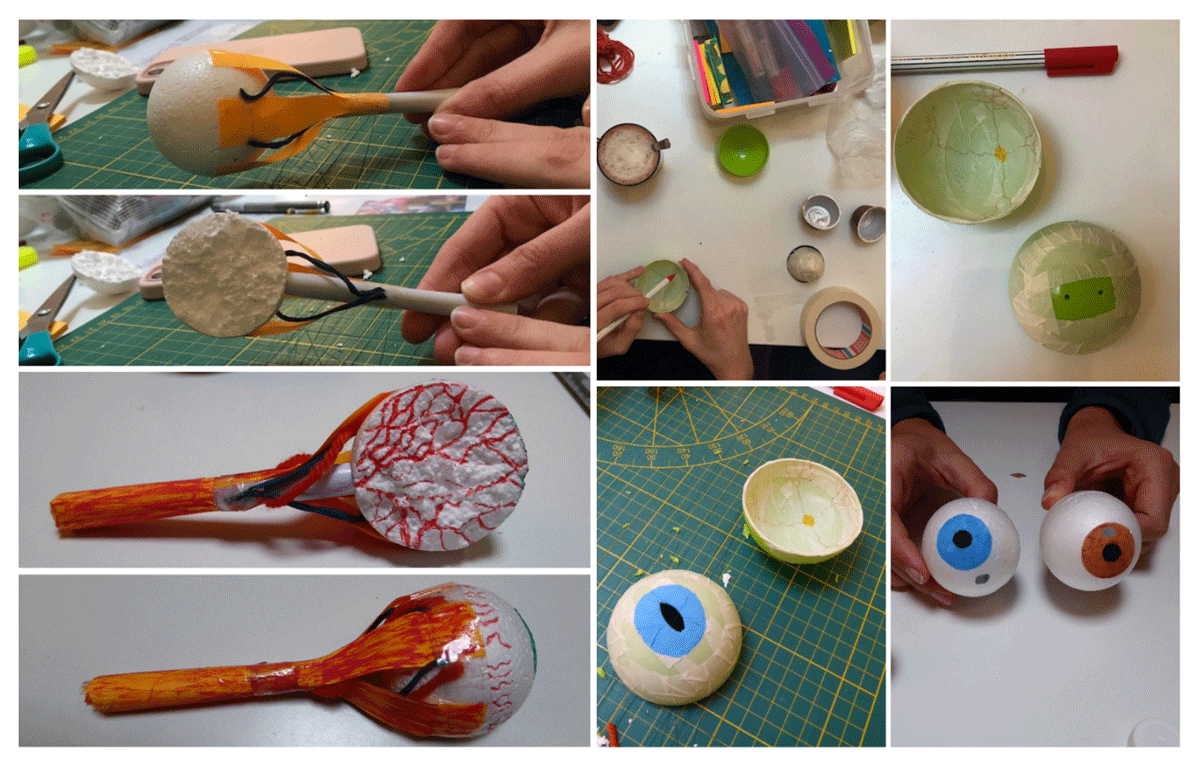
Instead we celebrate what we already have, offering an open-source investigation of the ideas shared by creative medical educators and students around the world, whether in articles or interviews. These are everyday designers of medical learning, playfully exploring how to teach the sensory skills and anatomical lessons so critical to training doctors.
The approach of this eye opener paper draws inspiration from educational theories such as learning-by-doing and constructivism, which maintain that learning is strengthened when students actively participate in the creation of physical objects. Thus, making is not only a practical activity, but also a way of thinking and learning through materials, integrating bodily, sensory, and social dimensions of knowledge.
Inside these pages you will find gorgeous illustrations, clear instructions for how to make tools and insightful essays exploring the ideas behind DIY in medical education. Beyond the practice, this project invites critical questioning of the origin of learning materials, the bodies they represent, and the possibilities of creating more diverse, accessible, and sustainable models.
Get your tools ready for there is plenty to make! Through ideas and play, we invite you to consider: where are my learning materials coming from? What are bodies are they representing and how might this be otherwise? What can I learn from making my own tools? What can I share with others?